
Stress Fractures in Runners: Warning Signs You Shouldn’t Ignore
Stress Fractures in Runners: Warning Signs You Shouldn’t Ignore
By Aaron Woolley, Physiotherapist
Running is fantastic for building cardiovascular fitness, muscular strength and even stronger bones. However, like most tissues in the body, bone needs the right balance between training stress and recovery to adapt. One running injury we take particularly seriously at Robina Physio on the Gold Coast is a bone stress injury aka stress fracture.
Bone stress injuries can start relatively innocently, and the early stress fracture signs in runners are often easy to miss. You might notice a small area of shin, foot or hip pain halfway through a run that disappears shortly afterwards. The problem is that continuing to run through these early symptoms can allow a relatively minor bone stress reaction to progress into a more significant stress fracture.
The good news is that when we identify these injuries early, treatment is generally much easier and time away from running can often be significantly reduced.
So, what should runners be looking out for?
What Is a Bone Stress Injury / Stress Fracture?
Bone is not a static structure. It is living tissue that continually adapts and remodels in response to the loads we place upon it.
Every time you run, small amounts of microscopic stress occur within your bones. Normally this is a good thing. During recovery, your body repairs this microscopic damage and adapts to better tolerate similar loads in the future.
A bone stress injury (BSI) or stress fracture develops when repeated loading begins to exceed the bone’s ability to recover.
Instead of completely repairing between training sessions, microscopic damage gradually accumulates.
Bone stress injuries exist on a spectrum. At the milder end we may see a bone stress reaction, while continued loading can eventually result in a more established stress fracture.
This is why early recognition is so important.
Why Are Runners at Risk of Bone Stress Injuries?
Running exposes the legs to thousands of repetitive loading cycles during every training session.
Thankfully, our bones are extremely good at adapting to this. The issue usually isn’t running itself; it is when there is a sudden mismatch between how much load the bone is receiving and how well it is recovering from that load.
Some common situations we see include:
- Rapid increases in weekly running volume
- Increasing long-run distance too quickly
- Adding several hard sessions into the same week
- Suddenly introducing speed work or hill training
- Marathon and ultramarathon training blocks
- Returning too quickly following injury or time away from running
- Significant changes in footwear
- Changes in running surface
- Inadequate recovery between sessions
- Poor nutrition or insufficient energy intake
Importantly, most bone stress injuries aren’t caused by one single thing.
It is usually a combination of training load, recovery, strength, nutrition and individual risk factors that eventually tips the balance.
Where Do Runners Get Bone Stress Fractures?
Bone stress injuries can occur throughout the lower limb.
Common locations in runners include:
- Tibia or shin bone
- Metatarsals in the foot
- Femur
- Femoral neck around the hip
- Fibula
- Navicular in the midfoot
- Pelvis and sacrum
The location matters because certain bone stress injuries are considered higher risk than others and may require more aggressive load restriction and specialist management.
For example, persistent deep hip or groin pain in a runner is something we take particularly seriously because of the possibility of a femoral neck bone stress injury.
Early Warning Signs of a Stress Fracture
One of the challenges with running is deciding which aches and pains are normal training soreness and which ones we need to investigate.
General muscular soreness after a hard training session is obviously common. Persistent, localised pain that repeatedly occurs when running is different.
Here are some of the warning signs I recommend runners watch for.
Pain That Develops During Your Run
In the early stages, bone stress pain may only begin after a certain distance.
For example, you may feel completely normal for the first 5km before noticing the same small area of pain.
As the injury progresses, the pain will often begin earlier in the run and become increasingly predictable.
A runner might notice symptoms initially at 10km, then 5km and eventually within the first km.
That progression is an important warning sign.
Pain That Seems to “Warm Up”
This is one I hear frequently in the clinic.
“It hurts when I start running, but after a few kms it feels better, so I thought it was okay.”
Unfortunately, improvement after warming up doesn’t necessarily mean an injury is safe to run through.
Symptoms associated with bone stress injuries can sometimes temporarily settle as you continue moving before becoming more painful later in the run or afterwards.
I wouldn’t use the fact that something “warms up” as evidence that it is safe to keep training on.
Localised Pain
Bone stress injuries will often produce pain in a relatively specific location.
Runners will frequently point to an area with one or two fingers rather than describing a broad region of muscular soreness.
This is particularly suspicious when the same exact spot becomes painful every time you run.
Pain After Running
Early bone stress injuries may initially only hurt while running.
As the injury progresses, symptoms can persist for several hours afterwards or still be noticeable the following morning.
If each run seems to make the area progressively more irritated, don’t simply keep testing it every day to see if it has improved.
Pain With Hopping
Single-leg hopping places considerably more load through the leg than normal walking.
For this reason, hopping can reproduce symptoms in people with bone stress injuries.
However, a hopping test alone cannot diagnose or rule out a stress fracture. If you already have significant pain, particularly around the hip or another high-risk location, repeatedly hopping on it isn’t something I’d recommend simply to test yourself.
Pain When Walking
Once a suspected bone stress injury starts hurting during normal day-to-day walking, we become more concerned about the severity of the injury.
At this point, continuing to run is generally not a good idea until the injury has been properly assessed.
Rest or Night Pain
Pain occurring at rest or pain that wakes you during the night deserves assessment.
It doesn’t automatically mean you have a severe bone injury, but it is certainly not something I would recommend ignoring.
Risk Factors for Bone Stress Injuries
Training errors are important, but they are only part of the picture.
When we assess a runner with a suspected bone stress injury at Robina Physio, we want to understand why that runner developed the injury at that particular time.
Training Load
Large or sudden increases in running load are commonly involved.
This isn’t only weekly kms.
Intensity, hills, long runs, running frequency and the amount of recovery between sessions all contribute to overall training stress.
An athlete may technically run the same weekly distance but dramatically increase their bone loading by adding intervals, hills and a longer Sunday run at the same time.
Previous Bone Stress Injury
A previous bone stress injury increases the importance of identifying the factors that contributed to it.
If the original issue was never addressed, simply resting until the pain disappears before returning to exactly the same training program can result in another injury.
Low Energy Availability and RED-S
One important and sometimes overlooked contributor is Relative Energy Deficiency in Sport (RED-S).
This occurs when an athlete’s energy intake is insufficient to adequately support both their training and normal physiological functions.
Over time, low energy availability can affect hormones, bone formation, recovery, immunity and athletic performance.
Although RED-S was historically discussed predominantly in female athletes, we now know that it can also affect male endurance athletes.
This is particularly important in runners who are training heavily, deliberately restricting food intake, losing weight or experiencing recurrent bone stress injuries.
Nutrition
Healthy bones need much more than calcium.
Adequate overall energy intake, protein, carbohydrates, calcium and vitamin D all contribute to bone health, training recovery and adaptation.
Where nutrition or low energy availability may be contributing, we may recommend working alongside your GP and an accredited sports dietitian.
Bone Density
Some runners may have reduced bone mineral density, particularly when there is a history of recurrent stress fractures or bone injuries occurring with relatively modest training loads.
In these situations, further medical investigation including blood tests or a DXA bone density scan may be appropriate.
Strength and Running Biomechanics
There isn’t one perfect running technique that prevents bone stress injuries.
Instead, we look at how an individual runner’s strength, movement and running mechanics interact with their training.
Factors we may assess include calf strength and endurance, hip and lower-limb strength, ankle mobility, single-leg control, running technique, footwear and how these change as the runner fatigues.
For some runners, addressing these factors can be an important part of reducing load on the injured area when they return to running.
How Do We Diagnose a Stress Fracture?
Diagnosis starts with a good history.
At Robina Physio, we will normally ask about your recent training, changes in weekly kms, long runs, intensity, footwear, previous injuries, recovery, nutrition and exactly how your pain behaves during and after exercise.
We then perform a physical examination to assess the painful area as well as relevant strength, mobility and functional testing.
Sometimes imaging is required.
One important point for runners to understand is that an X-ray can be completely normal during the early stages of a bone stress injury.
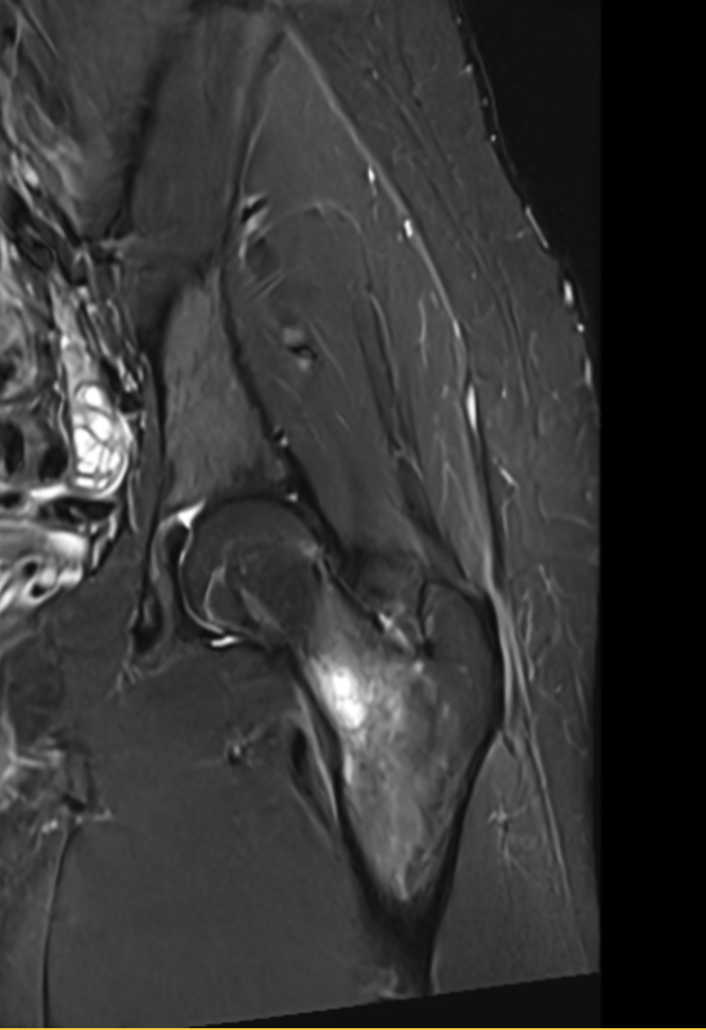
When there is a strong clinical suspicion of a bone stress injury, an MRI is generally the most useful investigation for detecting early bone stress changes.
Depending on the location and circumstances, X-ray or CT imaging may also be appropriate.
This is another reason why getting assessed early is important rather than assuming a normal early X-ray means there is nothing wrong.
How Are Bone Stress Injuries Treated?
Treatment depends heavily on the location and severity of the injury.
A mild tibial bone stress reaction is managed very differently from a higher-risk femoral neck or navicular stress injury.
Our initial goal is to reduce enough load from the bone to allow healing to occur without unnecessarily removing all physical activity.
Depending on the injury, rehabilitation may involve:
- Temporary reduction or cessation of running
- Modification of walking and everyday loading
- Cycling, swimming or aqua jogging where appropriate
- Progressive calf and lower-limb strengthening
- Hip and trunk strengthening
- Addressing identified mobility restrictions
- Running technique assessment were indicated
- Review of footwear and training structure
- Nutritional assessment or referral when required
- Gradual rebuilding of bone loading
- A structured return-to-running program
In more significant injuries, a period of protected weight bearing or specialist medical review may also be necessary.
The important point is that rest alone isn’t rehabilitation.
Allowing the bone to heal is obviously essential, but we also need to understand why the injury occurred and prepare the body for the loads it will experience once running resumes.
When Can I Start Running Again?
This is usually the first question runners ask me!
Unfortunately, there isn’t one answer that applies to every bone stress injury.
Return to running should be based on the location and severity of the injury and how the runner is progressing, rather than simply waiting an arbitrary number of weeks.
Before returning to running, we generally want normal day-to-day activities to be comfortable and the injured bone to be tolerating progressive loading appropriately.
Most runners then start with a structured walk-run program.
From there we progressively rebuild:
- Running frequency
- Continuous running duration
- Weekly running volume
- Long-run distance
- Faster running and higher-intensity sessions
Trying to rebuild all of these at once is a common way runners get themselves back into trouble.
Why Do Bone Stress Injuries Come Back?
Recurrence generally occurs because the bone has healed but the reason it became overloaded hasn’t changed.
Common examples include returning to previous mileage too quickly, immediately restarting speed sessions, inadequate lower-limb strength, poor recovery, persistent low energy availability or simply repeating the same training errors that contributed to the original injury.
Our aim at Robina Physio isn’t simply to get you pain-free.
We want to get you strong enough and prepared enough to tolerate your running again.
Can You Prevent Bone Stress Fractures?
We can never completely remove the risk of injury from running, nor would we want runners to be frightened of loading their bones.
Loading is one of the things that helps make bones stronger.
The aim is to create enough training stress to stimulate adaptation while still allowing adequate recovery.
Some simple principles include:
- Progress training gradually
- Avoid sudden spikes in weekly kms
- Introduce speed and hill work progressively
- Complete regular strength training
- Fuel appropriately for your training
- Allow sufficient recovery
- Pay attention to persistent localised pain
- Avoid making several major training changes at once
- Seek assessment early when symptoms aren’t settling
One of the biggest mistakes I see is runners ignoring the same pain for several weeks because they are worried that stopping will interrupt their training program.
Ironically, catching a bone stress injury early may be the very thing that prevents it from interrupting your training for much longer.
Shin Splints or Stress Fracture?
One common question we see is whether shin pain when running is simply shin splints or something more significant such as a tibial bone stress injury.
“Shin splints”, or medial tibial stress syndrome, usually causes a broader area of pain and tenderness along the inside of the shin.
A tibial bone stress injury or stress fracture is more likely to produce more focal pain over a smaller and very specific area.
Things that make us more suspicious of a bone stress injury include:
- Pain becoming progressively worse from run to run
- Pain beginning earlier during each run
- Pain persisting after exercise
- Pain with normal walking
- Significant focal tenderness over the bone
- Rest or night pain
There can be overlap between the two conditions, so it isn’t always possible to tell the difference yourself.
If you have persistent shin pain that keeps returning every time you run, particularly if you can point to one very specific painful spot, it is worth having it assessed rather than simply assuming it is shin splints.
Frequently Asked Questions
What Does a Stress Fracture Feel Like When Running?
A stress fracture often begins as a localised ache that appears after running for a certain distance.
As the injury progresses, the pain may begin earlier, become more intense and persist for longer after you stop running.
More advanced injuries may also become painful with walking or at rest.
Can You Run With a Bone Stress Injury?
Continuing normal running training on a confirmed bone stress injury is not recommended.
Exactly how much activity is appropriate depends on the location and severity of the injury.
Continuing to repeatedly overload the bone can potentially allow an early bone stress reaction to progress into a more significant stress fracture.
How Can You Tell Shin Splints From a Stress Fracture?
Shin splints usually cause pain and tenderness over a broader area along the inside of the shin.
A bone stress injury or tibial stress fracture is more likely to produce focal pain over a smaller area.
However, symptoms can overlap, so persistent or progressively worsening shin pain should be properly assessed.
Will a Stress Fracture Show Up on an X-Ray?
Not always.
Early bone stress injuries may not be visible on X-ray.
If there is a strong suspicion of a bone stress injury, MRI is generally more useful for detecting early changes.
How Long Does a Stress Fracture Take to Heal?
Healing time varies significantly depending on the bone involved, the severity of the injury and individual factors affecting bone health.
Rather than relying purely on a set timeframe, return to running should be guided by healing, symptoms and how well the bone tolerates progressively greater loads.
When Can I Return to Running After a Stress Fracture?
Most runners return gradually once normal day-to-day activities are comfortable and the injured bone is tolerating appropriate functional loading.
This commonly begins with a walk-run progression before continuous running, weekly volume and faster sessions are gradually reintroduced.
When Should You See a Physio?
I would recommend getting assessed if you develop:
- Persistent pain in one very specific area
- Pain that repeatedly appears at a similar point during your runs
- Symptoms that are appearing progressively earlier when running
- Pain that persists after running or into the following morning
- Pain during normal walking
- Recurrent pain in the same location
- Rest or night pain
- Hip or groin pain associated with running
- Pain that temporarily settles with rest but immediately returns when you start running again
When it comes to a potential bone stress injury, I’d much rather assess a runner too early than too late.
Stress Fracture & Running Physio Gold Coast
Bone stress injuries are much easier to manage when recognised early.
The small amount of shin, foot or hip pain that initially appears halfway through a run can sometimes be the first warning sign of an injury that becomes significantly more difficult to manage if you continue training through it.
At Robina Physio on the Gold Coast, we regularly work with recreational runners, competitive runners and endurance athletes experiencing running-related injuries.
Our assessment looks beyond simply identifying where you hurt. We assess your training load, strength, running biomechanics, recovery and other contributing factors before developing an individual rehabilitation and return-to-running plan.
If you’re experiencing persistent or localised pain when running, don’t wait until you’re limping before getting it assessed.
Contact Robina Physio on (07) 5578 7233 or BOOK ONLINE with one of our experienced physiotherapists.
The earlier we identify a bone stress injury, the better chance we have of getting you back to running safely and avoiding a more significant stress fracture.


